If a dentist tells you that a tooth needs root canal therapy, there’s no need to panic. Modern endodontic treatment is predictable, comfortable, and focused on relieving pain while preserving your natural tooth whenever possible. Compared with extraction, a successful root canal often restores function and prevents the complex long-term consequences that can follow tooth loss.
At the office of Fuller Smiles, we combine advanced instruments with a patient-centered approach to make the experience as calm and efficient as possible. Our priority is to protect your oral health and keep you informed so you can make confident decisions about preserving your smile.
Saving a tooth with root canal therapy preserves not only the visible tooth but also its role in maintaining jawbone integrity and proper bite alignment. When a natural tooth is removed, adjacent teeth can drift, opposing teeth can over-erupt, and the jawbone beneath the missing tooth can begin to resorb. Keeping a stable, functional tooth helps protect surrounding structures and supports predictable, long-term oral health.
A root canal eliminates infected or damaged tissue inside the tooth while leaving the outer structure intact. Once the canals are cleaned, shaped, and sealed, the treated tooth can often be restored with a crown or other permanent restoration to regain strength and durability. With careful restoration and regular maintenance, a treated tooth can provide many years — and often a lifetime — of service.
Choosing root canal therapy is also a conservative decision from a restorative standpoint. It allows you to retain as much of your natural dentition as possible, which is generally preferable to prosthetic replacements. For many patients, saving the tooth means preserving a natural appearance, comfortable chewing, and fewer interventions over time.

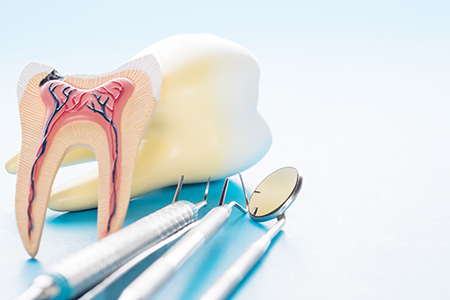
At the center of the tooth lies the dental pulp — a soft bundle of nerves, blood vessels, and connective tissue that helps the tooth develop and responds to injury. When cavities, cracks, or trauma breach the outer layers of enamel and dentin, bacteria can reach the pulp and cause inflammation or infection. Once the pulp is irreversibly inflamed or necrotic, root canal treatment is typically recommended to remove the source of infection and protect surrounding tissues.
Symptoms that commonly signal pulpal trouble include persistent toothache (especially pain that wakes you at night), heightened sensitivity to hot or cold that lingers after the stimulus is gone, and discomfort when biting. In other instances, a tooth may darken, a gum swelling or bump may appear near the root, or routine X-rays may reveal changes at the tip of the root before symptoms are obvious. Prompt evaluation helps determine whether root canal therapy is the best course.
Not every case of sensitivity or discomfort requires root canal treatment, but these signs merit timely assessment. Early diagnosis often means less complex treatment and a higher likelihood of preserving the natural tooth with a straightforward procedure and an appropriate restoration afterward.
Today’s root canal procedures are performed with high levels of precision and patient comfort. After administering local anesthesia to ensure the tooth and surrounding tissues are numb, the dentist isolates the tooth and accesses the inner chamber. Specialized instruments and irrigation solutions are used to remove diseased tissue, shape the canals, and thoroughly disinfect the internal spaces.
The canals are then filled with a biocompatible sealing material to prevent reinfection, and the access opening is temporarily or permanently restored depending on clinical needs. Some teeth can be treated in a single visit, while others — particularly those with complex anatomy or active infection — may require two appointments to ensure the canals are fully cleaned and healing has begun before the final restoration.
For patients who experience dental anxiety, sedation options are available to help make the procedure more comfortable. Your dental team will discuss anesthesia and sedation choices and tailor the visit to your comfort level while maintaining strict infection-control and safety protocols.

After root canal treatment, it’s normal to have some tenderness around the treated tooth as local tissues respond and begin to heal. Mild to moderate soreness for a few days is common and can typically be managed with over-the-counter pain relievers and short-term home care. Your dentist will provide specific instructions about oral hygiene, activity, and any medications if they are needed to address infection.
Because a tooth that has undergone root canal therapy can be more brittle than an untreated tooth, restoring it with a permanent crown or an appropriate restoration is usually recommended to reinforce strength and function. Until the final restoration is placed, avoid chewing hard or sticky foods on the treated side and follow any temporary-care guidance your dentist provides to prevent fracture.
Follow-up appointments allow your dentist to confirm healing and the success of the treatment. With proper restoration, routine dental care, and good oral hygiene, a root canal-treated tooth can remain comfortable and functional for many years. If you notice persistent pain, swelling, or any new symptoms after treatment, a prompt evaluation will help address issues before they progress.
At the office of Fuller Smiles, our approach to root canal care emphasizes clear communication and individualized treatment planning. We take time to explain the diagnosis, the steps involved, and the options for comfort management so you know what to expect at every stage. Educated patients tend to feel more at ease and are better prepared for recovery.
Your treatment plan will include recommendations for restoring the tooth after the canals are sealed, as well as guidance on maintaining oral health to reduce the risk of future problems. We coordinate each phase of care to minimize visits and to help you return to normal function as quickly and safely as possible.
If you are experiencing dental pain, have a tooth that has changed color, or have a history of trauma to a tooth, it’s wise to seek an exam sooner rather than later. Early evaluation often makes treatment simpler and outcomes more predictable.
In summary, root canal therapy is a well-established, conservative treatment that removes infection, relieves pain, and preserves your natural tooth when possible. With contemporary techniques and thoughtful restorative planning, treated teeth can continue to serve you effectively for many years. Contact us to learn more or to schedule an evaluation if you are concerned about a troublesome tooth. We are here to help you make informed decisions about your oral health.